Cart 0

 AI and Enterprise Architecture: The Practitioner Perspective

Artificial Intelligence (AI) has become synonymous with business transformation. Yet, beneath the surface of buzzwords and billion-dollar models, one unassailable truth remains: The impact of AI depends entirely on the quality, provenance, and contextual relevance of the data that fuels it. While large language models (LLMs) dominate headlines, their reliance on uncontrolled and often untrustworthy data sources may leave enterprises chasing fool’s gold instead of tangible value. The real competitive advantage comes not from scale, but from strategic curation and integration of an organization’s unique “data DNA.”

EACOE Methodology foundation (92).png

The Four Pillars of Enterprise AI

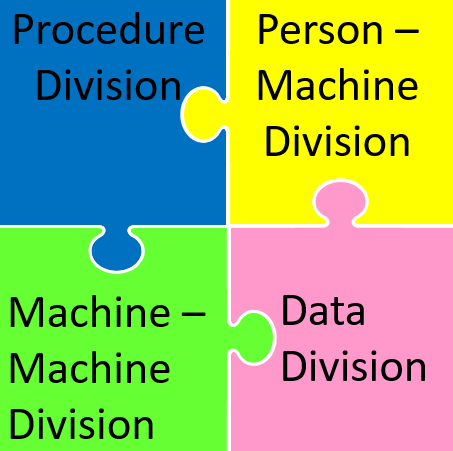
Four Divisions of Enterprise AI

Four Divisions of Enterprise AI

Every AI solution, much like any robust information system, relies on four essential components: the procedure engine, the person (“user”)-machine interface, the inter-application communication layer, and - most crucially - the data repository. The rapid technological advances in computing have supercharged AI’s processing capabilities and made interfaces more accessible. Machine-to-machine connectivity underpins seamless digital ecosystems.

A Critical Look at Data Types

Four Data Types for AI Training Models

Four Data Types Used For AI Training Models

Not all data is created with enterprise goals in mind. In fact, most AI models - LLMs in particular - train on enormous volumes of internet-derived data because it is free or cheap, abundant, and easily accessible. Unfortunately, this data often suffers from a lack of provenance or validation. Used indiscriminately, it can lead to unreliable or even harmful outcomes, especially when organizations cannot trace the origin or verify the accuracy of their outputs.

A second category, copyrighted data, presents an equally fraught challenge. High-profile debates, such as Taylor Swift’s well-publicized dispute over the use of her intellectual property, highlight the legal and ethical perils of using protected content without authorization. Many organizations and even entire industries are demanding stronger enforcement mechanisms to protect their content from unsanctioned AI harvesting.

More promising are data types rooted in a balanced exchange, such as exclusive reports or resources made available only through a transactional value exchange - think of a white paper accessible upon sharing your professional details. This creates a system of authentication, ensuring greater data quality and accountability.

Finally, the most valuable and least accessible data - what we might call best practice data - resides in a proprietary manner - within the organization itself. This proprietary information, developed through experience and investment, is the true “crown jewel” and holds the secret to lasting competitive differentiation. External analysts and consultancies recognize its worth, often charging premium prices for industry benchmarks or proprietary research. LLMs, limited to publicly available or dubiously sourced data, are locked out of this channel, and balanced exchange, cementing their limitations.

Why Large Language Models Fall Short

Despite their technical brilliance, LLMs face inherent weaknesses when deployed in enterprise settings. Trained on mostly uncontrolled and often ethically questionable sources, they cannot guarantee the accuracy, relevance, or legality of their outputs. Worse, the very openness that makes them powerful also exposes them to manipulation: cyber attackers, bad actors, and careless users can all pollute their training sets, introducing biases and vulnerabilities. In an enterprise context, this can translate into operational inefficiencies, brand risk, and costly legal exposure.

Toward Enterprise Amalgamated Information™️ (EAI)

Forward-thinking organizations are overcoming these pitfalls by embracing what can be called Enterprise Amalgamated Information™️ (EAI). Some in the industry refer to this a “small language models”. This approach replaces the indiscriminate appetite of LLMs with a focus on curated, validated, and proprietary data. Rather than relying on “artificial” intelligence built on others’ words, EAI centers on “amalgamated” intelligence shaped from within - fusing data extracted from systems, industry paywalls, business best practices, and mutual value exchanges.

Data Distribution Center

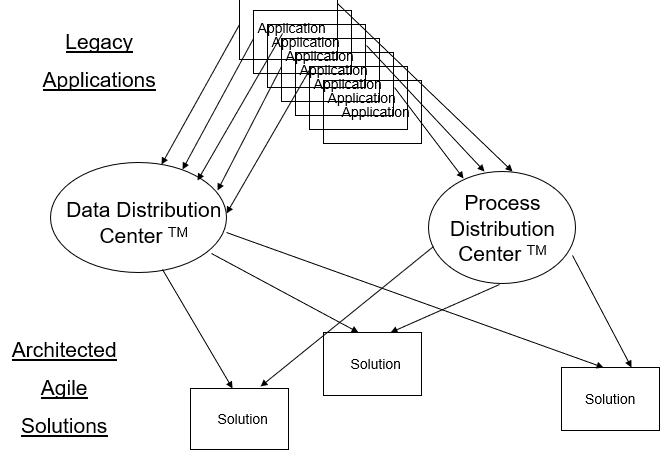
A foundational step is the creation of a Data Distribution Center - a centralized, ontologically structured data hub that ensures organization-wide consistency, traceability, and governance of enterprise data. Like a modern-day Dewey Decimal System, this structure classifies and aligns data to business needs, ensuring quality inputs for AI processing engines. Coupled with continuous, closed-loop improvement, EAI helps organizations move away from open-loop risks, compounding quality over time for increasingly better outcomes.

Ethical and Strategic Wins

The ethical dimension is inescapable. As data regulations tighten and public scrutiny intensifies, organizations deploying AI must be able to prove the source, ownership, and consent behind their data. EAI’s focus on closed, proprietary, and authentically obtained information not only avoids the landmines of copyright and privacy violation, it also delivers practical benefits - lower costs, reduced risks, and a measurable edge over competitors still reliant on public or questionable datasets.

Conclusion: From Fool’s Gold to Sustainable Value

The promise of AI cannot be separated from the quality of its fuel. Sophisticated algorithms built on sand will yield only digital fool’s gold - shiny, but lacking substance. For the agile enterprise, the future lies in harnessing the data they already own, architected for visibility, traceability, and strategic impact. By placing enterprise data - the organizational DNA - at the heart of their AI strategy, businesses transform technology into true, defensible advantage.

Gaining Competitive AI Advantage with Enterprise Architecture

Next Steps

The journey begins with a single data audit. Business leaders should inventory existing data assets, classify data by provenance and value, and build a central repository designed for trustworthy, agile use. For those seeking guidance, the Architecture Center Of Excellence (ACOE) offers frameworks and expert support for building next-generation data distribution centers and AI strategies grounded in enterprise value - not digital mirages.