Cart 0

Enterprise Architecture Certification: Types, Levels & Practitioner Paths

Introduction:

  • Enterprise Architecture (EA) training and certification are often seen as strategic moves: intended to elevate professional credibility, further organizational maturity, and equip leaders with frameworks and methodologies to drive business optimization and transformation.

  • As the field of Enterprise Architecture grows and the number of practitioners also increases, the need to distinguish Enterprise Architecture from other professions is greater than ever. Additionally, the need for proper EA training and certification is ever increasing. Because of these needs, it is not surprising that even in a young field such as Enterprise Architecture, the number of certification programs to choose from is growing.

  • Type “Enterprise Architect Certification” into any search engine and see the vast number of results. There is no baseline standard for the Enterprise architecture profession. The discipline of Enterprise architects is nowhere near the maturity of professional fields like surgeons, engineers, pilots/aviation, and architects for physical structures.

  • With many Enterprise Architect (EA) Certification programs to choose from, picking the right one can be a difficult task. With no set of worldwide recognized standards for EA certification yet available, how do you know you are picking the right one? Which Certification programs will give you the best measures of an architect’s capabilities?


What is The State Of Enterprise Architecture Certifications (in 2026 and beyond)

Certifications Moving to Demonstrated Competency Rather than Multiple Choice Exams

This moment is more critical than ever for the Enterprise Architecture (EA) community. SAP has dramatically transformed its certification program by moving away from traditional multiple-choice exams to practitioner-based demonstration of competencies. The new SAP certification requires candidates to validate their real-world ability to perform, configure, and deliver solutions within SAP environments through scenario-based assessments, modular skill paths, and annual hands-on practical evaluations.

To the EA and BA certification community — this is your call: We are next. This is EA 5.0.

Just as SAP's shift ensures professionals can apply knowledge effectively rather than memorize theory, EA and BA must also leave behind the multiple-choice exam model. The Enterprise Architecture Center Of Excellence (EACOE) have exemplified this practitioner-led certification approach since their inception, emphasizing workshops, project evaluations, and live competency demonstrations over rote memorization and multiple-choice exams. SAP's leadership in this transition validates the path EACOE have championed for years. EA certifications must urgently adopt similar practitioner models to maintain relevance, credibility, and impact in today's fast-evolving business-technology landscape.

How EACOE have Lead by Example

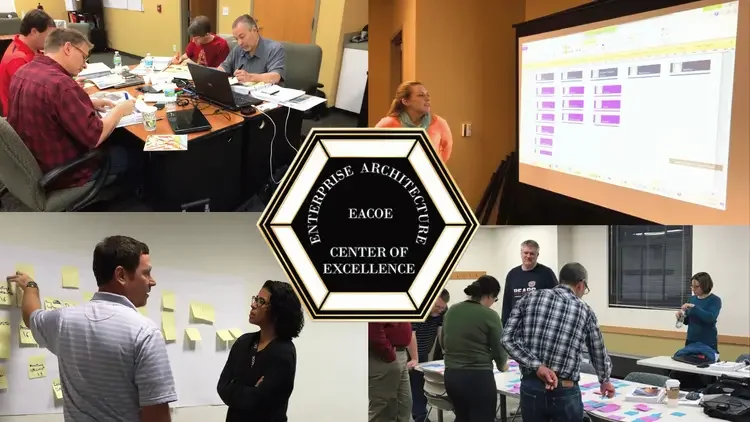
EACOE certification is built around hands-on practitioner workshops, rather than just passing theory-based exams. Participants must demonstrate their ability to build usable architectures in real-world scenarios, ensuring they can "do" architecture, not just "talk" it. Key features include:

  • In-depth, focused workshops rather than rote memorization or after-the-fact tests.

  • Multi-level certification paths that reward real experience, peer review, and practical ability — not just exam results or self-report.

  • Emphasis on integrating architecture practices across disciplines, fostering collaboration between business and information technology professionals.

  • Enterprise Frameworks and practice maturity models that go beyond "compliance" to create continuous improvement and measurable business value.

The Far-Reaching Effects Across Stakeholders

The transition from traditional multiple-choice exam certifications to practitioner-based, demonstrated competency models profoundly impacts all participants in the ecosystem:

 
  • Certified individuals holding exam-based credentials may face declining credential value as employer preference shifts toward proven applied skills.

  • Organizations that have relied on multiple-choice certifications for staff qualification risk skills misalignment with business needs; those embracing new competency models gain competitive differentiation.

  • Hiring managers relying on multiple-choice certifications encounter diminished effectiveness in screening for true skills and job fit.

  • Recruiters face challenges in adapting from quick-certification keyword filters to more nuanced assessment of demonstrated competencies.

  • Instructors must evolve from teaching to "pass exams" based on memorization to facilitating applied learning with scenario-based workshops and hands-on projects.

  • Certifying agencies reliant on multiple-choice exam fees face potential revenue declines; those that innovate gain enhanced credibility and long-term sustainability.


The multiple-choice exam model is fading as an industry measure. The profession's future — and its credibility — depend on this approach becoming the new standard.


How to evaluate Enterprise Architecture Certifications (and What Mistakes to avoid)

Summary: We have developed a checklist based on questions that those seeking Enterprise Architect Certification commonly ask. It will enable you to evaluate each Certification program, aid in your selection process, and ensure that the EA Certification program you choose delivers the most practical, effective measure of Enterprise Architect maturity and capabilities possible.

Learn more using the drop-down arrow next to each evaluation item:

WATCH: Enterprise Architecture Certification: Mistakes to Avoid.


A complete Enterprise Architecture Training, Education, and Certification Program requires the following (overview):

 
  • An Enterprise Architecture Process

  • An Enterprise Architecture Framework

  • An Enterprise Architecture Work Breakdown Structure and Methodology

  • An Enterprise Architect Maturity Model

  • An Organization Change Model, Process, Methodology, and Work Breakdown Structure

  • A set of Business understanding components

  • A set of Technology understanding components

  • An understanding of Enterprise Architecture Models

  • An understanding of Enterprise Solution Models

  • Components geared toward “short-term value” that can be built upon to provide “long-term value”

  • Templates and tools to provide immediate practitioner guidance

  • Criteria to allow practitioners to be recognized for growing competencies as their experience grows, based on actual Enterprise Architecture enablement activities

  • Classroom presentation and training course materials

  • An integrated enabling tool to take as much of the “burden” out of the development process.


How to compare the two types of Enterprise Architecture Certifications

If you are an individual or organization desirous of developing Enterprise Architecture, there are various Enterprise Architecture certifications, frameworks, methodologies, tools, deliverables, and results. Some Enterprise Architect certifications and training focus on theory at the expense of developing an Enterprise Architecture by focusing on a series of exam questions to be answered.

Others focus solely on information technology or a specific technology, such as cloud computing, and exclude the interests of non-technical and non-management personnel. Some Enterprise Architecture training has the learning objective of passing multiple choice exams that accept a passing score of 55%. Others require no demonstration of skills and are not business-driven, acting as “certification mills.”

There are primarily two types of organizations that provide EA certifications, training, frameworks, and methodologies;

Franchised-Based Organizations offer Enterprise Architecture Certifications courses and training materials “for lease” and are offered similar to a hamburger-franchise model:

  • The franchised teaching organization pays the course provider a fee, gets the course material, and then has the attendee come back to the franchiser and pays to take a multiple choice exam.

Practitioner-Based EA Certifications from Enterprise Architecture Center Of Excellence (EACOE) teaches the attendee to actually do Enterprise Architecture in the classroom and is continually mentored by world-class Enterprise Architects.

  • Practitioner-Based is not a franchisee-friendly approach and is much more beneficial and rigorous. The instructors are World Class Enterprise Architecture Practitioners, active in the Enterprise Architecture field, not just script or PowerPoint slide readers.

 
Category Franchise-Based (others) Practitioner-Based (EACOE)
Courses are More than 75 % of Lecture Less than 25% Lecture - a majority being workshop and practice
Courses Provide Information on Enterprise Architecture (similar to an Encyclopedia) Proven Step-by-Step Enterprise Architecture Methodology and Project Plan – ready to go on "Monday Morning," in addition to a broader knowledge base.
End Product of the EA Courses - A passing grade above 55% on exams Development of Enterprise initiatives and pathways to move the enterprise to its desired state
- Static models
- "Shelf ware"
Resources Available to You After the Course Are completed A website or nothing Amongst other resources- Full availability of the Course in Video Format for review and reinforcement of learning objectives
Tools to Support Your EA Efforts Are not provided as part of the courses Are provided in a full Enterprise Architecture methodology and tool included in the course
Shows examples of Enterprise Architecture projects Classroom-Based Examples Real-Life Examples
Enterprise Architecture Courses concentrate on Only modeling activities "Soft" communication and listening skills, along with modeling activities
Enterprise Architecture Course is geared toward people With modeling experience Who are personnel from management, non-management, and experienced professionals
Enterprise Architecture Certification is based on 55% correct on multiple-choice, a, b, c, d tests Actual classroom-developed Enterprise Architecture efforts
 

What are the two types of Certified Enterprise Architects

High Impact Trusted Architects (HITA) vs. Certified In Name Only (CINO)

Summary: “HITAs” are valued for their ability to drive real change, align architecture with business strategy, and mentor others, making them essential to organizational success. “CINOs” may hold certifications but lack the practical skills and impact required to be effective, often limiting the profession’s advancement and credibility.


Comparison Table (overview)

Aspect High Impact Trusted Architect (HITA) Certified In Name Only (CINO) Architect
Impact Delivers measurable, strategic value Minimal or no organizational impact
Experience Demonstrated track record, real projects Certification without proven practice
Influence Broad and deep across teams and domains Limited, often isolated
Skillset Technical, strategic, leadership, mentoring Theoretical, exam-based
Professionalism Recognized as trusted advisor, leader Seen as lacking professional credibility
Certification May have, but not defined by, credentials Defined solely by possession of certification
Contribution Drives change, innovation, and improvement Performs routine or administrative tasks
 

High Impact Trusted Architects (HITA)

High-impact Trusted Enterprise Architects are professionals who deliver tangible value and strategic impact to their organizations. Their distinguishing characteristics include:


Certified In Name Only (CINO) Architects

Certified In Name Only (CINO) Enterprise Architects possess certifications but lack the practical skills, experience, or impact that define true professionals. Their typical traits include:

A true professional Enterprise Architect must go beyond certification, demonstrating real-world results, strategic thinking, and leadership that earn trust and drive organizational progress.


How to Become the Preferred Certified Enterprise Architect Practitioner

“It's Simple— Our Enterprise Architecture Coaches Don't Believe That Passing A 'Multiple Guess' EA Exam Makes You An Enterprise Architect.

The only way to become an Enterprise Architect is to create an Enterprise Architecture! That is what EACOE is all about."

 ~Sam Holcman~

 
EACOE Enterprise Architecture Certification and Training Workshop

As in other professions, passing an exam is woefully inadequate to become a professional in that field; the same is true for Enterprise Architect professionals.

The EACOE certification approach is simple and straightforward:

  • Learn the practice of Enterprise Architecture in the EACOE Workshop.

  • Perform the Enterprise Architecture development you have learned as a part of the EACOE Workshop Itself.

  • Be mentored and reviewed by the world's most experienced Enterprise Architects during the Workshop.


Certification through EACOE.org provides you and your team with the most effective approaches and is the benchmark for the Enterprise Architecture practitioner profession. Review the details and dates of EACOE Workshops.

Whether new to the field, motivated for enhanced knowledge, or desire state-of-the-art credentials, EACOE Workshops provide many benefits. Benefits to you, your stakeholders, and your Organization. EACOE Workshops are comprehensive in scope. They teach professionals how to build, design, and implement Enterprise Architecture (with the correct dose of IT and business strategy). You receive domain expertise in the foundational areas of Enterprise Architecture and industry awareness and understand significant business trends, architecture skills, and practice expertise. You gain enhanced personal skills like visual and strategic thinking and people skills. You will be recognized for your achievements—now and in the future.

What you get from an EACOE Workshop is the ONLY Enterprise Architect Training Program that provides EVERYTHING Professionals and Organizations need to get going “Monday Morning.” Including high-return methods, easy-to-use tools, proven techniques, optimized framework, real-world examples, step-by-step videos, and more.

Giving You The Ability To Create Effective EA that addresses Business Change and Enables Business goals and Strategy

EACOE, as a practitioner firm, actually does Enterprise Architecture – not just provide courses or education like the “others” out there. EACOE Enterprise Architecture Certifications and Training are for Practitioners - by Practitioners.

You will be able to demonstrate the practical application of Enterprise Architectures based on real-world business processes, problems, and events. EACOE provides you with actual enterprise architecture practice and experience building models and completing analyses in an Enterprise Architecture “project.”


What are the EACOE Enterprise Architecture Practitioner Certification Levels

Certified EACOE Enterprise Architect Practitioners receive a physical certificate and lapel pin. These are colored to denote the appropriate Enterprise Architect Certification (with a note of the expiration date). Certified members gain access to a secured area of our website with member-only content.


Four distinct member grades recognize the professional accomplishments of EACOE members:

EACOE Certified Enterprise Architect Badge

Certified Enterprise Architect

Recognizes those EACOE members who have demonstrated classroom performance and presentations and completed the EACOE Certification Workshop and associated modeling activities. This Certification is gained directly after the EACOE Workshop.

Valid for up to two years from successful Enterprise Architecture Workshop completion.

EACOE Certified Senior Enterprise Architect Badge

Certified Senior Enterprise Architect

Recognizes those EACOE members with at least three years of professional experience. And who have demonstrated performance that sets them apart from their peers.

  • Three years of continuous Enterprise Architecture experience

  • Five years of professional experience

  • Demonstrated performance on one actual Architecture Development reviewed by EACOE

  • Three recommendations from colleagues

  • Certification is valid for up to three years - from the completion of the Architecture Certification Development or upon the date of certification from EACOE

EACOE Certified Distinguished Enterprise Architect Badge

Certified Distinguished Enterprise Architect

Recognizes those members with at least five years of professional experience that have made significant accomplishments in the Enterprise Architecture field.

  • Five years of continuous Architecture experience

  • Seven years of professional experience

  • Demonstrated performance on three actual Architecture Developments that EACOE has reviewed

  • Accomplishment in, or impact on the Enterprise Architecture fields

  • Four to seven recommendations from colleagues in the field. One of these recommendations must be from an EACOE Member

  • Valid for up to three years from the completion of the third Enterprise Architecture Development

EACOE Enterprise Architect Fellow Certification Badge

Certified Enterprise Architect Fellow

Our most prestigious membership recognizes the top EACOE members for their outstanding accomplishments in Enterprise Architecture.

  • Seven years of continuous Architecture experience

  • Demonstrated performance on five actual Architecture Developments that EACOE has reviewed

  • Outstanding accomplishments in or significant impact on the Enterprise Architecture fields

  • Eight recommendations from colleagues in the field. Three of these recommendations must be from EACOE Members

  • Valid for up to five years from the completion of the fifth Enterprise Architecture Development


Do you think you already have what it takes to produce EACOE's quality Enterprise Architecture?

If you already have skills or certifications that qualify for EACOE Certification, you can become an EACOE-Certified Enterprise Architect Practitioner at no cost.

EACOE’s objective is to both professionalize and promote Enterprise Architecture, and this no-cost offering is unique in the industry. Submit your application by filling out this form.


What are the Requirements for EACOE Enterprise Architect Practitioner Re-Certification
Like all GREAT Certifications, there is an "expiration date," and ours have one also – two years. Recertification can be done in two different ways:

Option #1: Re-Attend Workshop

Re-attend an EACOE Enterprise Architecture Training and Certification Workshop at a 30% fee reduction from the current Workshop fee. Format options include:

  • Classroom Based

  • Distance Learning

  • Self-Paced

  • 1-on-1 (no fee reduction for the one-on-one workshop)

Option #2: Submit Re-Certification Application

Submit equivalent work products for Re-Certification. To promote the "profession", we do not charge for this work products review service.

We look for a submission that provides a traceable path,

we can observe, from a set of architecture models (architecture elements, definitions, structure) (1), transformation of the architecture models into implementation/relationship models (2), a transformation path, generation of the architecture and relationship models into projects/initiatives/capabilities (3), the definition for the architecture elements (name, definition) and the representation and definition of the initiatives (4), the provision for the understanding required by multiple stakeholders, and the priority scheme to move the organization to its desired state (5).

We would suggest a submission with these attributes being addressed and assist us by adding the numbers that indicate the different elements of the submission from the Architecture definition.

Please identify which of your submissions are associated with Architecture models (architecture elements, definitions, structures).

Please identify which of your submissions are associated with the transformation of these Architecture models into implementation/relationship models.

Please identify how the transformation from the architecture models to implementation/relationship models occurred, and which items are associated with these transformations – traceability and transparency are imperative.

Please identify which of your submissions are the generation of the projects/initiative/capabilities, from the architecture models and relationship models, and the techniques used for these generations.

Please identify which of your submissions are the definitions of the initiatives/projects/capabilities that were derived from the architecture models, and relationship models.

Please identify which of your submissions identify the various stakeholders, and which of your submissions are related to these various stakeholders.

Please identify which of your submissions identify the prioritization criteria used to prioritize the initiatives/projects/capabilities.


References and Citations:

Author: Sam Holcman and ©Enterprise Architecture Center Of Excellence™ (EACOE™) Team.

Author biography (overview): For over five decades, Sam Holcman has been considered the practitioner’s practitioner in Enterprise Architecture, and the world’s leading implementer, educator, and trainer in Enterprise Architecture methodologies and techniques. As the Managing Director of the Enterprise Architecture Center Of Excellence (EACOE) since 1972, he has over 4,500 field engagements with organizations globally, in addition to coaching and certifying over 160,000 professionals in the discipline of EACOE™ Enterprise Architecture.

Originally Published: August 25, 2019 | Last Updated: May 21, 2026